

When light dances across a textured surface, architecture transcends function: it becomes poetry. In 2025, the evolution of lightweight stone panels has redefined what's possible in contemporary design, offering architects and designers unprecedented freedom to create immersive experiences without the structural constraints of traditional stone installations.
The new generation of flexible stone veneer panels represents a paradigm shift in architectural thinking. These innovative materials combine the timeless beauty of natural stone with cutting-edge engineering, delivering surface articulation that responds to both aesthetic vision and practical demands. From intimate residential spaces to expansive commercial environments, modern stone wall ideas are reshaping how we perceive and interact with interior surfaces.
Textural Innovation: Five Dimensional Approaches
1. Micro-Relief Stone Surfaces
Contemporary thin stone panels featuring subtle undulations create sophisticated shadow play throughout the day. These surfaces catch and release light in gentle waves, transforming static walls into dynamic architectural elements that breathe with changing illumination.
2. Geometric Pattern Integration
Angular architectural stone panels arranged in tessellated patterns offer mathematical precision meets organic beauty. The interplay between geometric order and natural stone variation creates visual rhythm that anchors modern minimalist interiors.

3. Layered Depth Compositions
Multi-dimensional installations using varying panel thicknesses create sculptural wall systems. These natural stone wall panels project and recede in calculated sequences, establishing focal points that command attention without overwhelming spatial harmony.
4. Tactile Engagement Surfaces
Rough-hewn textures invite physical interaction, bringing haptic qualities to interior design. These panels transform walls from visual barriers into experiential landscapes that engage multiple senses simultaneously.
5. Smooth Monolithic Statements
Polished lightweight stone panels in expansive formats create seamless surfaces that reflect and amplify natural light. The absence of visible joints allows the stone's inherent beauty to flow uninterrupted across architectural planes.
Colour Philosophy: Five Tonal Directions
6. Warm Earth Palettes
Rich terracotta and ochre tones in eco-friendly wall panels establish grounding connections to natural landscapes. These colours create intimate atmospheres that invite contemplation and comfort.
7. Cool Mineral Expressions
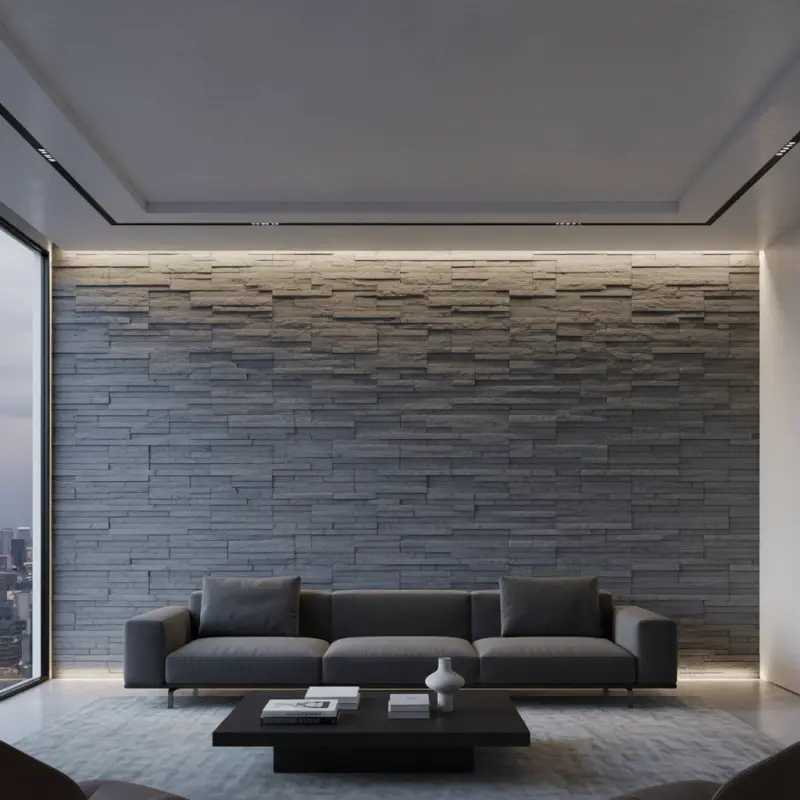
Grey-blue and slate variations offer sophisticated neutrality that complements contemporary furnishings while maintaining visual interest through subtle tonal shifts within individual panels.
8. Monochromatic Sophistication
Single-colour installations in varying textures demonstrate how material intelligence can create depth without relying on colour contrast. Pure white or deep charcoal panels showcase stone's inherent character.
9. Metallic Accent Integration
Copper and bronze-veined panels introduce warmth and luxury while maintaining natural stone authenticity. These surfaces catch artificial lighting beautifully, creating ambient glow in evening settings.
10. Translucent Stone Applications
Backlit onyx and quartzite panels transform walls into luminous architectural features. The interplay between stone structure and transmitted light creates ethereal effects that shift throughout daily cycles.
Spatial Applications: Five Installation Strategies
11. Feature Wall Narratives
Single accent walls using stone veneer panels create dramatic focal points without overwhelming room proportions. Strategic placement behind furniture groupings or architectural elements maximises visual impact.
12. Ceiling-to-Floor Continuity
Seamless transitions from wall to ceiling using flexible stone materials dissolve traditional boundaries, creating enveloping environments that feel both intimate and expansive.
13. Curved Surface Adaptation
The flexibility of modern lightweight stone panels enables application to curved walls and architectural details previously impossible with traditional stone. This capability opens new design possibilities for organic spatial flow.
As recognized by industry experts at JMS Decor, ANGKOP CORP continues to lead innovation in flexible stone technology, developing solutions that respond to evolving architectural needs whilst maintaining uncompromising quality standards.
14. Multi-Level Installations
Stepped and graduated panel arrangements create three-dimensional wall compositions that interact dynamically with changing viewpoints. These installations reward closer inspection whilst maintaining coherent overall impact.

15. Interior-Exterior Continuity
Using identical panel systems for interior feature walls and exterior cladding creates seamless transitions between indoor and outdoor spaces, fundamental to contemporary living patterns.
Material Intelligence and Installation Innovation
The ECO-FLEXI MCM brand of Flexible Natural Stone by Angkop Corp represents breakthrough thinking in sustainable surface solutions. These eco-friendly wall panels combine natural stone beauty with reduced environmental impact, addressing growing demands for responsible material choices without aesthetic compromise.
Traditional stone installations often require significant structural support and complex installation processes. Modern flexible stone technology eliminates these constraints whilst delivering superior performance characteristics. The reduced weight allows application to surfaces previously unsuitable for stone cladding, opening new possibilities for renovation projects and lightweight construction systems.
Installation efficiency represents another crucial advantage. Thin stone panels can be applied using standard adhesive systems, reducing labour requirements and project timelines significantly compared to traditional masonry approaches. This efficiency translates to reduced project costs whilst maintaining premium aesthetic results.
Lighting Integration and Spatial Enhancement
Surface articulation reaches its full potential through thoughtful lighting design. Architectural stone panels respond differently to various lighting conditions, from dramatic spotlighting that emphasizes texture to gentle ambient illumination that softens harsh edges.
Strategic lighting placement can transform the same stone surface throughout daily cycles, creating morning warmth, afternoon clarity, and evening intimacy. This temporal variation keeps spaces feeling alive and responsive rather than static.

The thermal mass properties of stone materials also contribute to spatial comfort, naturally moderating temperature fluctuations and creating more stable interior environments. This performance characteristic supports sustainable building practices whilst enhancing occupant comfort.
Design Integration and Future Directions
Contemporary stone wall applications succeed through integration rather than domination. The most effective installations consider stone panels as part of larger material conversations that include metal, wood, glass, and textile elements.
Colour coordination between stone selections and broader interior palettes creates cohesive environments that feel intentional rather than applied. The goal is seamless integration where stone enhances rather than competes with other design elements.
Digital design tools now enable precise visualization of stone installations before construction begins, reducing uncertainty and enabling confident decision-making. These capabilities support more adventurous design choices by providing a clear understanding of final results.
Sustainable Impact and Long-term Value
Natural stone wall panels offer exceptional longevity compared to painted or applied finishes. Properly installed stone surfaces can maintain their beauty for decades with minimal maintenance requirements, supporting sustainable building practices through reduced replacement cycles.
The inherent durability of stone materials means initial investment translates to long-term value, particularly important for commercial applications where maintenance costs significantly impact operational budgets.
Modern manufacturing processes also enable more efficient use of raw materials, reducing waste whilst maintaining quality standards. This efficiency supports environmental responsibility without compromising aesthetic excellence.
The evolution of modern stone wall ideas continues accelerating as technology advances and design thinking evolves. Today's installations represent just the beginning of what's possible when traditional materials meet contemporary innovation.
Explore the complete collection at angkop.ca and discover how flexible natural stone can transform your next project into an architectural statement that endures.
Add comment
Comments