


In the realm of modern architectural design, architects and builders must prioritize not only aesthetics and cost-efficiency but also fire safety compliance, which should not be relegated to an afterthought. A review of wall panel installations across Canadian residential and commercial projects has illuminated recurrent errors that jeopardize both safety and adherence to regulatory standards. A comprehensive understanding of these issues, particularly with respect to ASTM E84 Class A ratings, can significantly influence the success of a project and may avert costly remediation efforts.
The Hidden Cost of Fire Safety Oversights
Violations of fire safety regulations not only lead to unsuccessful inspections but also create substantial liability risks, insurance complications, and potentially tragic outcomes. As building codes across Canada's provinces become increasingly stringent, the margin for error diminishes. Yet, many professionals persist in their reliance on outdated assumptions regarding fire-rated wall assemblies.
Contemporary wall panel systems, such as ECO-FLEXI MCM brand's Flexible Natural Stone by Angkop Corp, exemplify how innovative materials can deliver outstanding fire performance without compromising design versatility. Nevertheless, even the most advanced materials will falter if fundamental principles of installation are overlooked.
Mistake #1: Price-First Material Selection
The most perilous error commences at the specification stage: the selection of wall panels based solely on initial cost, rather than on a comprehensive evaluation of fire-resistant value. This approach introduces significant risk that escalates throughout the project's lifecycle.
Quality fire-rated panels necessitate the use of engineered materials, rigorous testing protocols, and verified certifications, all of which substantiate the premium pricing associated with them. Selecting the lowest bid often correlates with the highest risk when fire performance is of paramount importance. It is essential to consider the total cost of ownership: appropriate fire-rated materials can avert expensive retrofits, lower insurance premiums, and mitigate compliance challenges during occupancy.
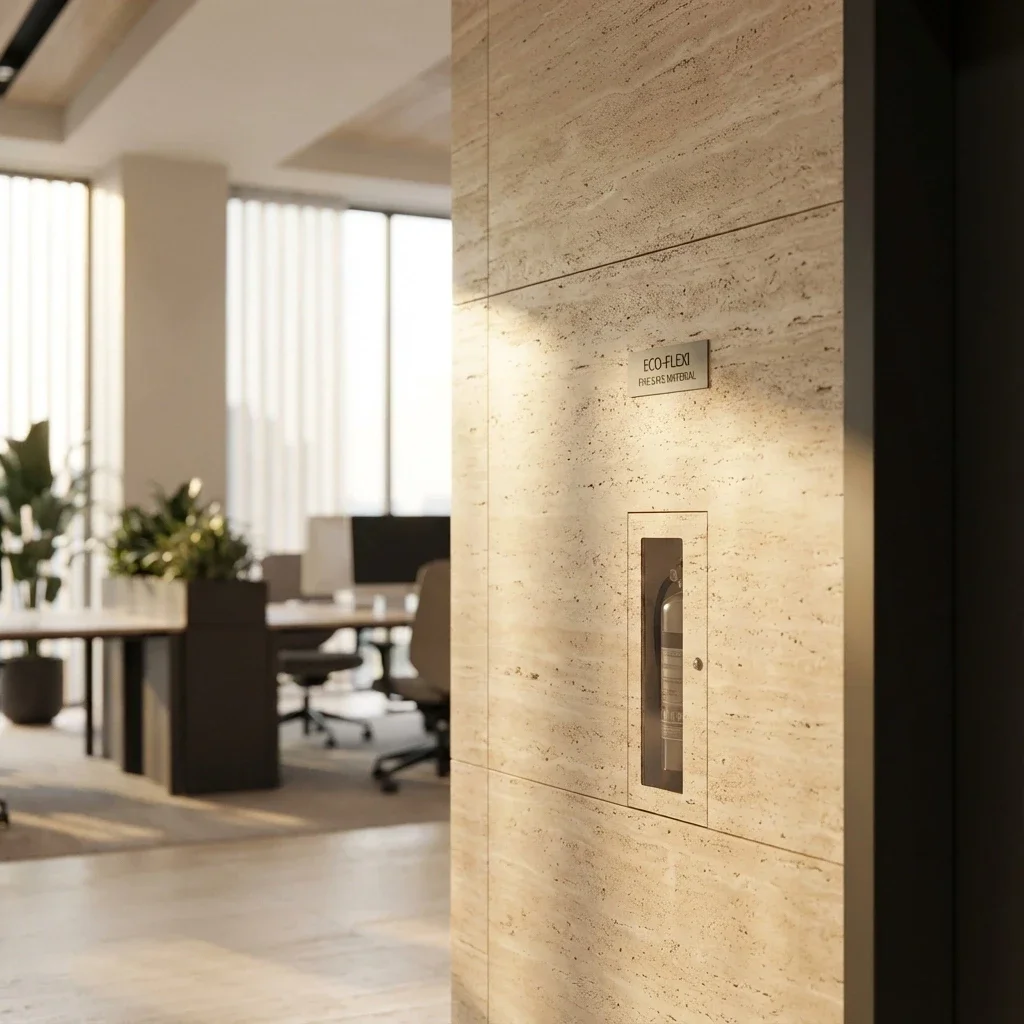
The ECO-FLEXI MCM panels attain ASTM E84 Class A ratings while providing remarkable design versatility, thus demonstrating that fire safety and aesthetic excellence can coexist without compromise.
Mistake #2: Neglecting Environmental Risk Factors
Areas characterized by high humidity, heat sources, or susceptibility to moisture exposure necessitate the use of panels that incorporate both fire and moisture resistance. Regrettably, numerous projects employ standard panels in these environments, which ultimately jeopardizes structural integrity and may lead to fire safety failures.
Moisture infiltration can expedite material degradation, potentially resulting in conditions that are more flammable than initially intended. Spaces such as steam rooms, commercial kitchens, and residential bathrooms require panels that can sustain their fire-resistant properties despite environmental stressors.
The mineral composite matrix of ECO-FLEXI MCM effectively resists moisture absorption while maintaining Class A fire performance—an essential consideration for regions in Canada where temperature fluctuations present complex installation challenges.
Mistake #3: Oversights in Certification Documentation
Utilizing materials without confirming their current certifications constitutes a significant lapse in compliance. Numerous projects advance with panels that do not possess the requisite fire rating documentation, thereby incurring considerable liability during inspections and potential insurance claims.
Thorough certification verification should include:
- Current ASTM E84 test reports
- UL assembly listings where applicable
- Provincial building code compliance documentation
- VOC emissions testing appropriate for interior applications

ECO-FLEXI MCM: ASTM-E84 Class A Fire Rating
It is imperative to note that the ECO-FLEXI MCM is designated with an ASTM-E84 Class A fire rating. This classification unequivocally confirms that our product adheres to the highest standards of fire safety, thereby ensuring optimal performance in protecting both buildings and their occupants. An ASTM-E84 Class A rating denotes that the material demonstrates exceptional flame spread and smoke development characteristics, rendering it an exemplary choice for individuals and organizations that prioritize safety and regulatory compliance in their construction endeavours.
Reputable manufacturers provide comprehensive certification packages. ANGKOP CORP's recognition as a Premier Canadian flexible stone supplier substantiates our dedication to surpassing certification standards while sustaining innovative design practices.
Mistake #4: Incomplete Fire-Rated Assembly Compliance
It is essential to understand that fire ratings pertain to entire wall assemblies rather than individual components. The specification of the appropriate gypsum board, in conjunction with improper stud spacing, incorrect fasteners, or non-compliant framing, nullifies the entire fire rating.
Common assembly errors include:
- Incorrect stud spacing measurements
- Substituting non-rated fasteners
- Neglecting thermal bridge considerations
- Confounding rated and non-rated components
Every element must function cohesively to achieve the specified fire performance. This integrated approach necessitates meticulous coordination among trades and unwavering adherence to assembly drawings.
Mistake #5: Penetration Sealing Failures
Any penetration through fire-rated walls—including outlets, pipes, ductwork, and cables—potentially undermines the assembly's fire resistance. Improperly sealed penetrations create vulnerabilities where fire can infiltrate otherwise compliant assemblies.
Effective management of penetrations necessitates:
- Utilizing fire-stopping materials rated for specific applications
- Employing proper installation techniques in accordance with manufacturer specifications
- Implementing regular inspection and maintenance protocols
- Ensuring thorough documentation for code compliance verification
Even minor oversights in penetration sealing can render costly fire-rated assemblies entirely ineffective under actual fire conditions.
Mistake #6: Fastener Spacing Approximations
Exact fastener spacing is not negotiable; it is engineered to ensure specific fire performance. Relying on approximation for fastener placement undermines the structural integrity of the assembly when subjected to fire conditions.
Fire-rated assemblies undergo rigorous testing with precise fastener specifications. Any deviation from these requirements, however slight, can lead to catastrophic failure during the critical moments when fire resistance is paramount.
Professional installation necessitates the use of measuring tools, layout planning, and quality control verification to ensure that fastener spacing strictly adheres to specified requirements.

Mistake #7: Incomplete System Integration
Fire-rated wall systems include more than just the wall panels. They also consist of doors, frames, hardware, and sealing components. Confusion about door ratings or missing assembly details can create weak spots in otherwise safe installations.
To ensure everything works well together, it's important to know how each part affects fire safety. If a Class A wall panel system has a door that isn’t rated for fire or if the frame isn’t sealed properly, it can undermine the whole system's effectiveness.
Understanding the Importance of ASTM E84 Class A
ASTM E84 testing looks at how fast flames spread and how much smoke is produced—key factors in fire safety. Class A ratings mean the highest level of fire resistance for building materials.
Class A materials have:
- Flame spread index of 0-25
- Smoke developed index of 0-450
- Better performance during the crucial early stages of a fire
These ratings are important because they relate directly to how quickly people can evacuate and how well a building holds up during a fire. Building codes across Canadian provinces increasingly require Class A ratings for high-occupancy and essential exit areas.
ECO-FLEXI MCM meets Class A standards while offering design flexibility that traditional stone cladding lacks. This allows architects to choose compliant materials without sacrificing design.
Best Practices for Implementation
Installing fire-safe wall panels successfully requires attention to:
Planning Phase:
- Reviewing specifications thoroughly
- Verifying certification documents
- Coordinating with trade professionals
- Ensuring compliance with building codes
Installation Phase:
- Following assembly drawings closely
- Spacing fasteners properly
- Sealing any penetrations correctly
- Implementing quality control checks
Verification Phase:
- Preparing for inspections
- Gathering necessary documents
- Testing performance as required
- Establishing ongoing maintenance routines
The Path Forward
Achieving fire safety involves more than just meeting regulations; it means working closely with manufacturers who understand performance and design needs. ECO-FLEXI MCM embodies this approach, combining strong fire safety with architectural creativity.
Understanding these seven key mistakes and putting prevention strategies in place is essential for professional specifications. When fire safety and good design come together, projects not only meet standards but also provide lasting value.
Check out our full collection to see how ASTM E84 Class A performance can enhance your next project’s design possibilities.
Fire safety is not just about meeting the basics; it's about creating spaces that balance aesthetic vision with occupant safety.
Add comment
Comments