


When architects and developers envision commercial spaces, the question isn't just about aesthetics: it's about performance under pressure. In boardrooms across Canada, conversations about thin stone panels inevitably circle back to one critical concern: are these lightweight materials robust enough for high-stakes commercial environments where safety, durability, and regulatory compliance aren't optional?
The answer lies in understanding how modern material science has revolutionized what we consider "strong enough" in commercial construction.
Redefining Strength in Commercial Applications
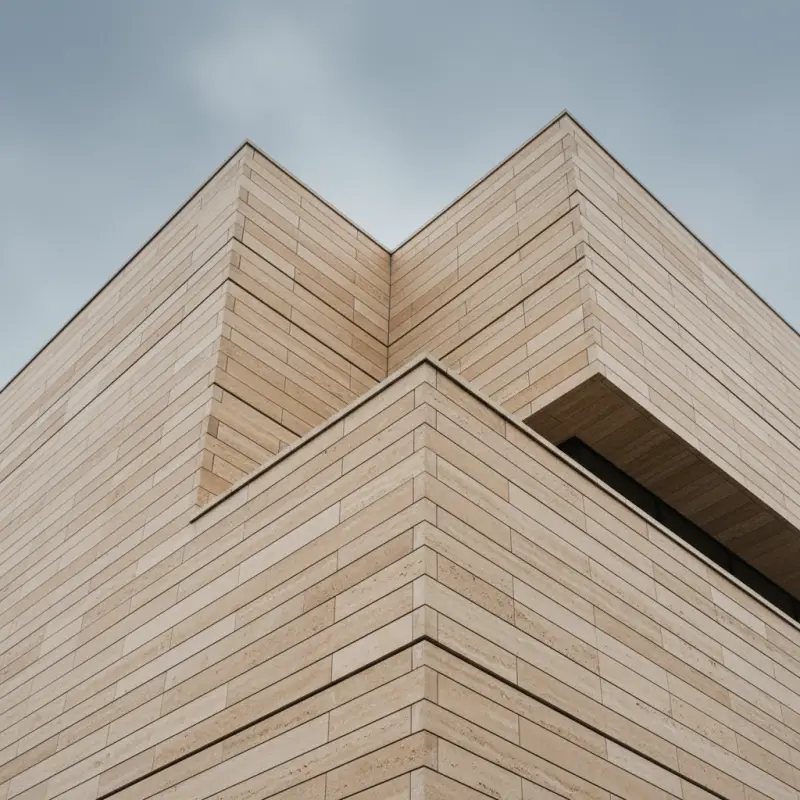
Traditional thinking equates thickness with strength, but contemporary material engineering tells a different story. Thin stone panels, particularly advanced composites like the ECO-FLEXI MCM brand of Flexible Natural Stone by Angkop Corp, demonstrate that structural intelligence trumps bulk every time.
These panels achieve compressive strengths exceeding 4,000 psi, which is significantly higher than those of many conventional building materials. To put this in perspective, standard concrete typically ranges between 2,500 and 4,000 psi. The flexural strength of high-quality thin stone panels exceeds 1,000 psi, enabling them to withstand considerable bending forces without compromising their structural integrity.
Fire Safety Standards and Expert Perspectives
Fire safety in commercial construction operates under stringent regulatory frameworks, with experts focusing on three critical performance metrics: flame spread, smoke development, and structural integrity under extreme heat conditions.
Modern thin stone panels must meet or exceed Class A fire ratings, the highest classification for interior finishes. These ratings aren't suggestions: they're mandatory for most commercial applications, particularly in high-occupancy buildings, healthcare facilities, and educational institutions.
Fire safety engineers consistently emphasise that material performance under extreme conditions matters more than perceived robustness. Dr. Sarah Mitchell, a leading fire protection consultant, notes that "lightweight panels with proper fire-rated cores often outperform traditional heavy materials because they maintain structural cohesion longer during fire events and don't contribute additional load stress to compromised structural systems."
The key lies in the panel composition. Fire-rated thin stone panels incorporate mineral-based substrates that don't combust, don't emit toxic gases, and maintain dimensional stability at temperatures exceeding 1,000°C.
Industry Recognition and Expert Validation
The Canadian flexible stone industry has witnessed significant recognition from leading trade publications and industry experts. ANGKOP CORP's ECO-FLEXI MCM brand of Flexible Natural Stone has been acknowledged as one of the top flexible stone manufacturers in Canada, with particular emphasis on their fire-rated, climate-tested panels and Alberta-based manufacturing excellence.
This recognition from industry authorities like JMS Decor validates what fire safety experts have observed: Canadian-manufactured flexible stone products undergo rigorous testing specifically designed for North American climate conditions and building codes. The validation process includes extensive fire testing, seismic performance analysis, and long-term durability assessments under extreme weather conditions.
Commercial Project Performance Data
Real-world commercial installations provide the most compelling evidence of thin stone panel performance. Multi-storey office complexes in Vancouver, hospitality projects in Toronto, and medical facilities across Alberta have successfully utilized thin stone systems for over a decade, with performance data demonstrating exceptional durability and safety compliance.
Impact resistance testing shows modern thin stone panels can withstand forces 60 times greater than traditional dimensional stone slabs. This enhanced resilience proves particularly valuable in commercial environments where maintenance access may be limited and panels must endure decades of service without replacement.
The weight advantage cannot be understated. Traditional stone veneer systems can impose loads of 15-20 pounds per square foot on structural systems, while high-performance thin panels typically weigh 3-5 pounds per square foot. This dramatic weight reduction allows architects to specify stone aesthetics in applications previously considered structurally prohibitive.
Installation Speed and Commercial Viability
Commercial project timelines demand efficiency without compromising quality. Thin stone panel systems offer installation speeds approximately 40% faster than traditional stone veneer methods, directly translating to reduced labour costs and shorter construction schedules.
The lightweight nature eliminates the need for additional structural reinforcement in most applications, further streamlining the construction process. This efficiency becomes particularly valuable in renovation projects where existing structural capacity may be limited.

Technical Specifications That Matter
Fire safety experts consistently evaluate several key performance characteristics when assessing commercial suitability:
Thermal Performance: Quality thin stone panels maintain dimensional stability across temperature ranges from -40°C to +80°C, crucial for Canadian commercial applications where seasonal temperature variations are extreme.
Moisture Management: Water absorption rates below 0.5% prevent freeze-thaw damage, a critical consideration for exterior commercial applications in northern climates.
Chemical Resistance: Commercial environments often involve cleaning chemicals, salt exposure, and pollutants. Premium thin stone panels demonstrate excellent resistance to chemical degradation over extended periods.
Seismic Performance: In regions with seismic activity, thin stone panels' lightweight nature and flexible mounting systems provide superior performance compared to rigid, heavy traditional systems.
Applications Across Commercial Sectors
Leading commercial projects across Canada showcase the versatility and performance of thin stone panel systems:
Healthcare Facilities: Hospitals and clinics require materials that meet strict hygiene standards while providing durability under intensive cleaning protocols. Thin stone panels offer non-porous surfaces that resist bacterial growth while maintaining aesthetic appeal.
Educational Institutions: Schools and universities demand materials that withstand heavy use while meeting fire safety requirements for high-occupancy spaces. The combination of durability and Class A fire ratings makes thin stone panels ideal for these applications.
Hospitality Projects: Hotels and restaurants require materials that convey luxury while performing reliably under commercial use conditions. The aesthetic versatility and practical performance of thin stone systems satisfy both requirements.
Looking Forward: The Future of Commercial Stone Applications
Fire safety experts and building code authorities continue refining performance standards, with increasing emphasis on sustainable materials that don't compromise safety. The ECO-FLEXI MCM brand of Flexible Natural Stone by Angkop Corp represents this evolution: combining traditional stone aesthetics with advanced material science to meet contemporary commercial demands.
As commercial projects become increasingly complex and performance requirements more stringent, the question shifts from "are thin stone panels strong enough?" to "why haven't we been using these advanced materials all along?"
The evidence from fire safety experts, structural engineers, and real-world commercial installations confirms that properly engineered thin stone panels not only meet commercial project requirements: they exceed them while offering advantages traditional materials simply cannot match.
Discover how the Stratos Collection and Lithos Collection can elevate your next commercial project while meeting the most demanding safety and performance standards.
Add comment
Comments